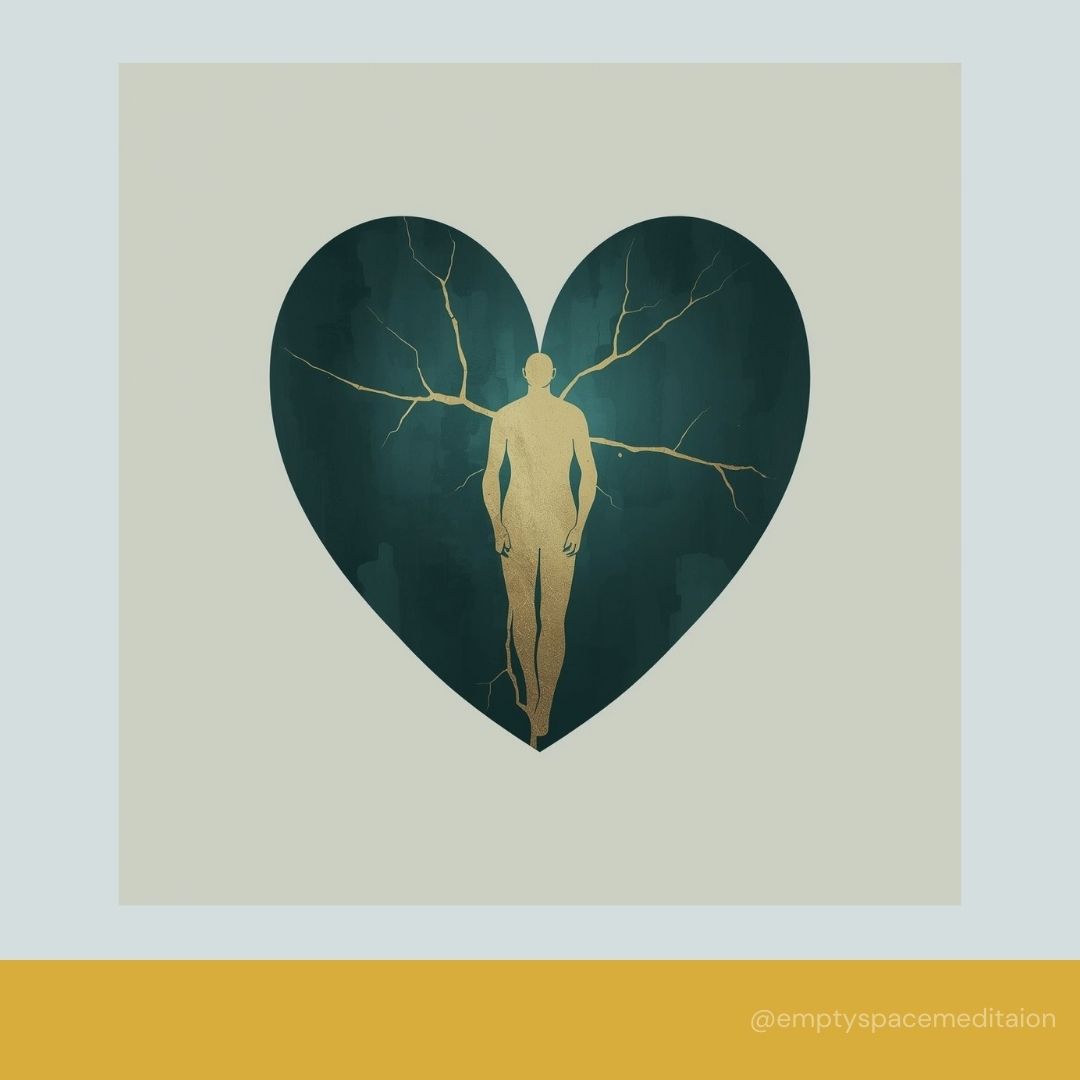
Bréné Brown writes: “If we can share our story with someone who responds with empathy and understanding, shame can’t survive.”
Shame is a creature of darkness. It grows in secrecy, in isolation, in the gap between who you appear to be and what you know to be true about yourself. It feeds on the conviction that if anyone really knew, they’d see through the performance and find the thing underneath that makes you fundamentally unacceptable.
I carried that for a long time. The arrests, the drinking, the ways I had hurt people — not just the facts of them, but the interpretation I placed on them, which was: this is who you are. Not what you did. Who you are. That distinction is what Brown means when she separates guilt from shame. Guilt says I did something bad. Shame says I am something bad. Guilt can be addressed. Shame just grows.
Ruth King — a Spirit Rock guiding teacher whose work on race, trauma, and healing I find genuinely important — writes that “the heart can transform suffering when we’re willing to attend to it with care.” Attending with care is the opposite of what shame requires to survive. Shame requires inattention, avoidance, the maintained pretense that the thing you’re ashamed of doesn’t exist or doesn’t matter.
Brown’s research is specific about the mechanism: “Shame corrodes the very part of us that believes we are capable of change.” This is why keeping it secret doesn’t protect you. It doesn’t protect you from other people’s judgment — it protects the shame itself. It keeps the shame in exactly the conditions it needs to keep growing.
What I’ve found, both in my own experience and in working with people, is that speaking it — telling the specific truth to one safe person who meets you with empathy rather than judgment — does something nothing else does. Not broadcasting it. Not confessing publicly. Just telling one person who already sees you and letting them see this too.
Spring Washam, in A Fierce Heart, talks about liberation as the practice of bringing awareness to what has been kept in the dark. That’s the work. Shame cannot survive being seen clearly by a compassionate witness. It’s not that the thing you’re ashamed of stops being true. It’s that its power over you changes fundamentally when it exists in relationship rather than in isolation.
Find one safe person. Tell one true thing. Watch what happens to the grip.