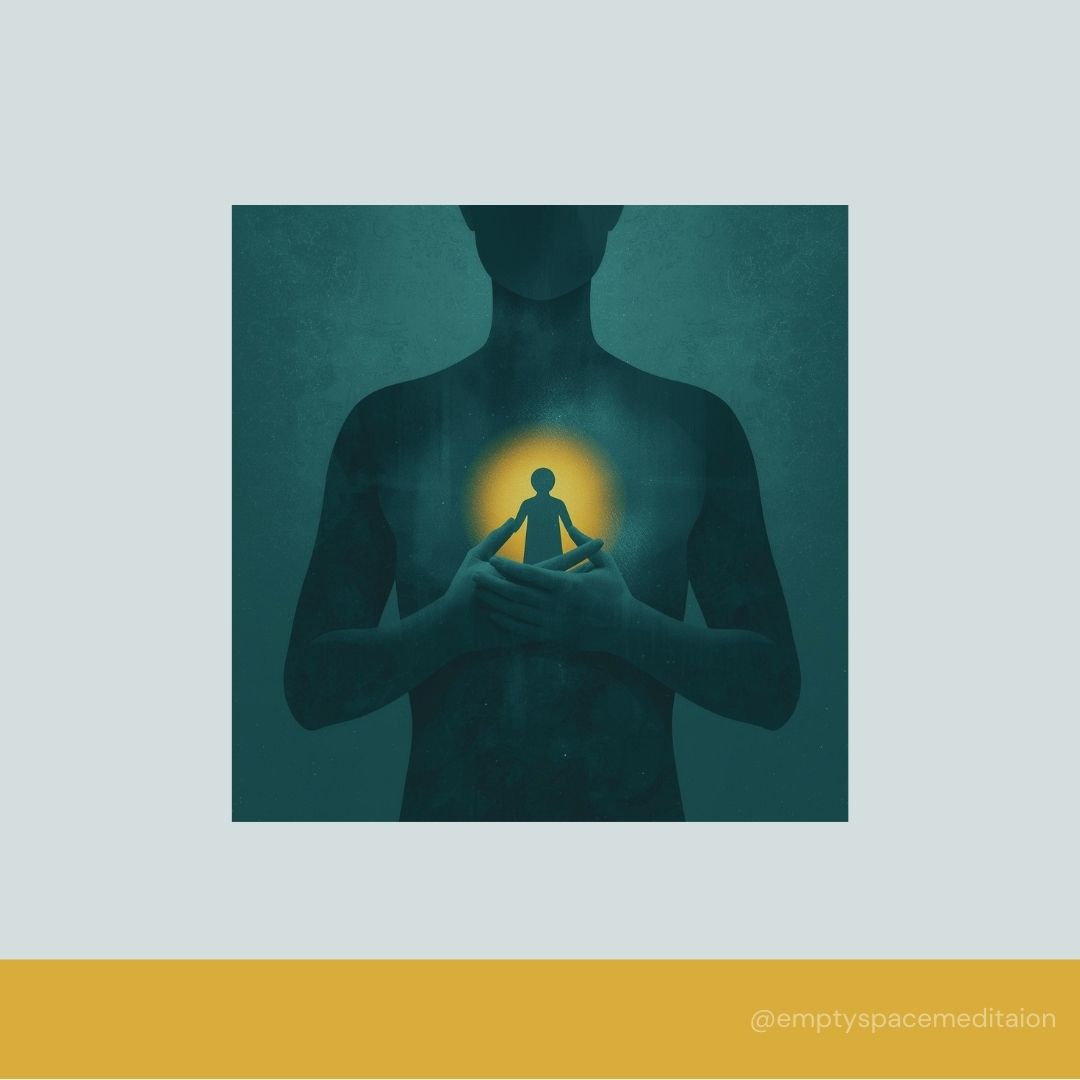
Jack Kornfield and Tara Brach teach: “We must look at ourselves over and over again in order to learn to love, to discover what has kept our hearts closed, and what it means to allow our hearts to open.”
What kept your heart closed was not getting what you needed as a child. Safety. Validation. A stable, consistent presence that stayed calm and curious when you were upset, rather than escalating or withdrawing. You deserved that. Many of us didn’t get it. And the absence doesn’t disappear just because you grew up — it echoes through adult life as patterns of self-abandonment, excessive self-criticism, difficulty tolerating your own needs.
You can’t go back. But you can give yourself now some version of what you needed then. Kristin Neff calls this the self-compassion break — the practice of meeting your own difficult moments with the same quality of care a genuinely supportive parent would have offered. Not fixing, not lecturing, not minimizing. Just: this is hard, and you matter, and you don’t have to carry it alone.
Jon Kabat-Zinn, who has spent decades on the clinical applications of mindfulness, describes the practice in terms that map onto exactly this: paying attention on purpose, with kindness. The attention itself is the reparenting. The willingness to notice what you’re feeling without immediately judging or suppressing it — that noticing is the presence you needed and can now offer yourself.
Bessel van der Kolk makes the clinical case: healing trauma requires “directly counteracting the helplessness and invisibility associated with trauma.” As a child you were helpless. As an adult you’re not. You can now choose to show up for the younger version of yourself in ways no one did then — not through nostalgic self-pity, but through the concrete daily practice of treating yourself as someone who deserves care.
Thich Nhat Hanh writes: “Because you are alive, everything is possible.” Including this. Including giving yourself the love that wasn’t available when you most needed it. You deserved it then. You deserve it now. The practice is simply deciding to act accordingly.