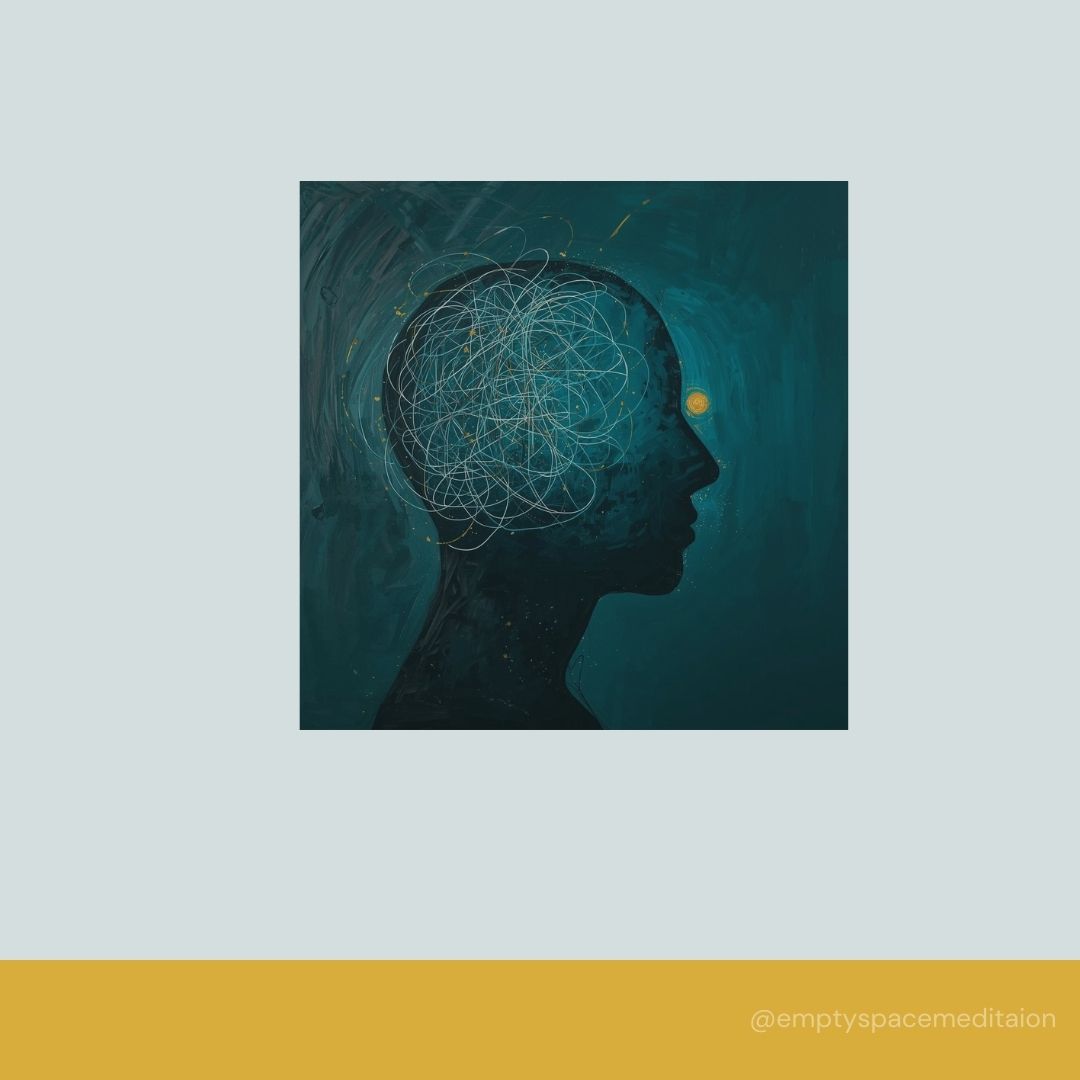
Dan Harris calls it “the incessant, insatiable voice in your head.” The one that never stops. The one that woke you up at 3am to remind you of something embarrassing you said in 2009. The one that reviews your performance after every conversation and finds it lacking. The one that can’t let you feel okay for five consecutive minutes without scanning for something to be anxious about.
Harris is specific about the double-edged nature of this voice. It drove him through hypercompetitive television news — kept him pushing, striving, achieving. It also led him to cocaine as self-medication and a very public breakdown on Good Morning America. Same voice, same volume. Asset in one context, liability in another. Which is the problem: the voice doesn’t modulate based on whether it’s helping or destroying you. It just runs.
Joseph Goldstein at Insight Meditation Society calls it “the comparing mind” — always measuring, always ranking, always asking how you’re doing relative to some standard that keeps moving just far enough ahead to stay out of reach. You get the promotion and the voice immediately starts in on the next level. You finish the project and the voice is already cataloging what you should have done better. There is no arrival point that silences it.
George Mumford — who worked with Jordan, Kobe, and Shaq through those Bulls and Lakers championship years — describes the shift that practice makes: from self-consciousness to presence. Self-consciousness is the voice monitoring your performance. Presence is actually doing the thing. The voice makes you watch yourself. Presence lets you be yourself.
Meditation doesn’t silence the voice. I want to be clear about that because the idea that it should creates a lot of unnecessary discouragement. People sit down, the voice immediately starts in with commentary on their sitting technique, and they think they’re failing. They’re not. That’s just the voice doing what voices do.
What practice builds is the ability to recognize the voice as a voice. To notice “there’s that comparing thought” or “there’s the shame story running again” — to see it from a slight distance rather than being completely inside it. Tara Brach developed a framework she calls RAIN for working with exactly this — Recognize, Allow, Investigate, Nurture — which I learned in my Banyan training. It doesn’t fight the voice. It meets it with curiosity instead of identification.
The voice lies sometimes. It tells you that you’re not enough, that everyone else has it more together, that the anxiety you’re feeling is evidence of something fundamentally wrong with you. One of the most useful things about working with an accountability partner is that another person can often hear when your voice is lying to you in ways you can’t from inside it.
The voice isn’t your enemy either, to be clear. It kept you alive long enough to find something better. It just doesn’t know when to stop.