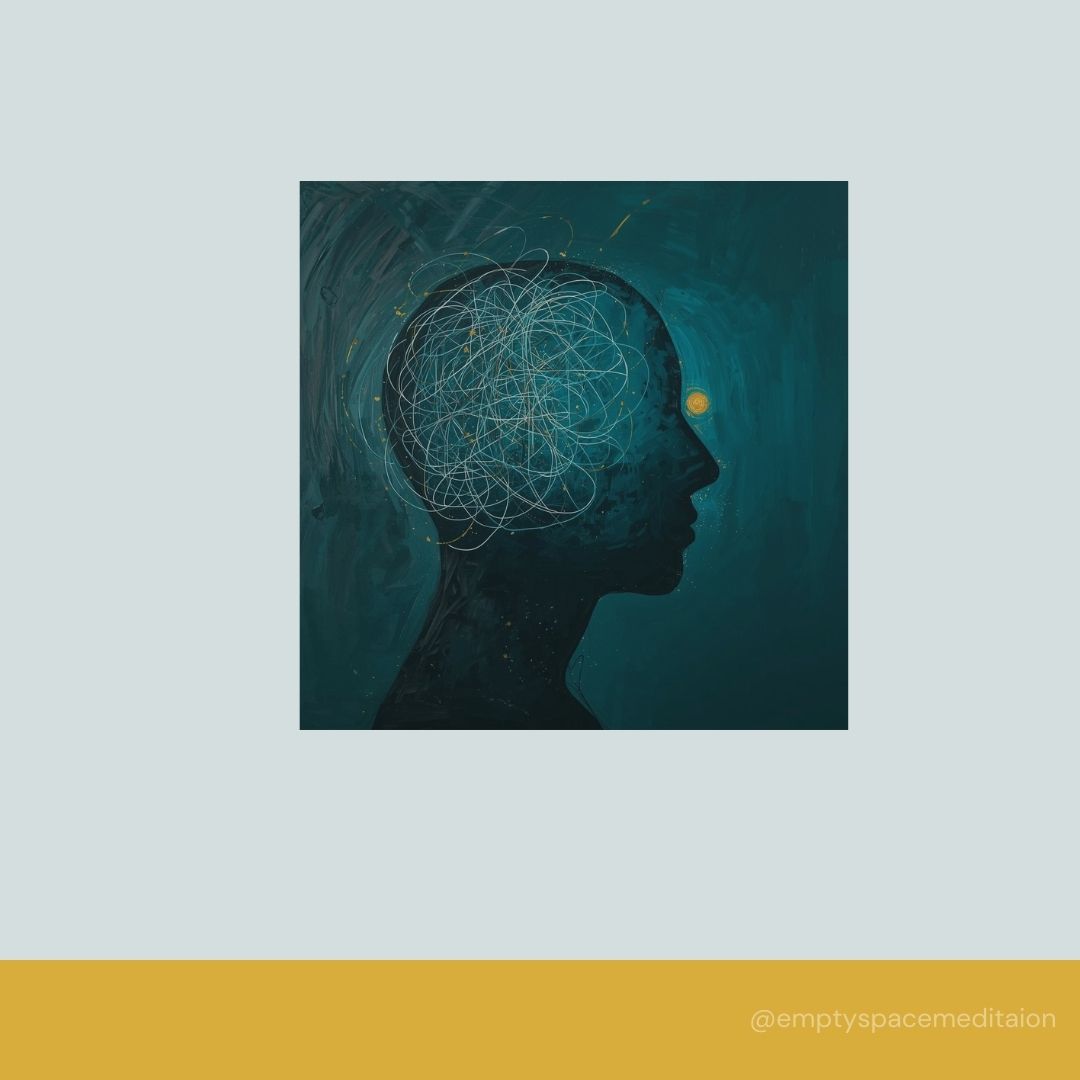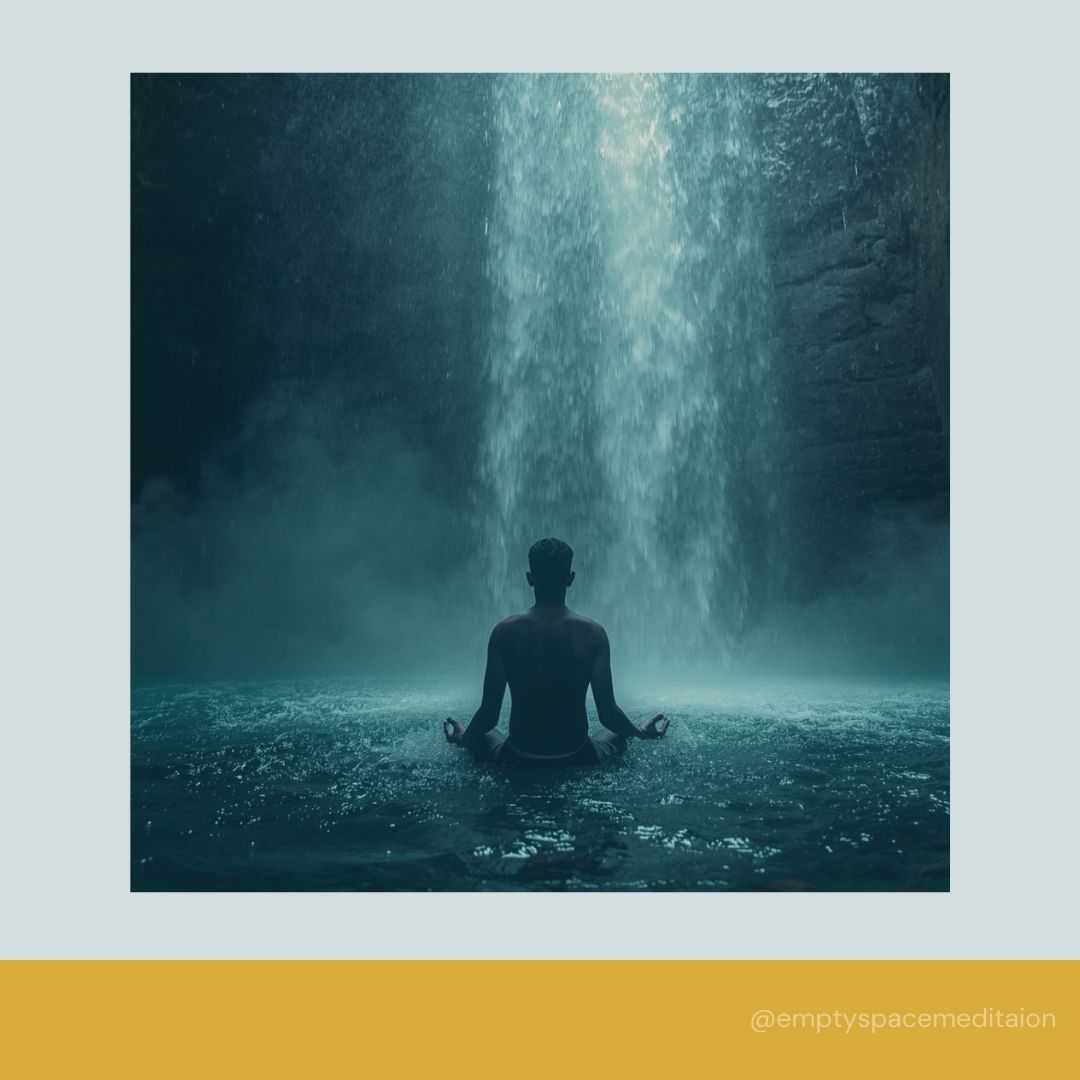
Dan Harris, the ABC News anchor who had a panic attack on live television and spent the next decade figuring out what had happened, describes the mind like a waterfall. The water is the torrent of thoughts — the plans and worries and replays and grocery lists and sudden intrusive memories. Mindfulness is the space behind the waterfall.
I love this image because it’s accurate in a way that most meditation instruction isn’t. The waterfall doesn’t stop. That’s not the goal. The goal isn’t to silence your mind or achieve some thought-free state of peaceful blankness. Your thoughts will keep coming for as long as you’re alive and probably constitute evidence that you are.
What changes with practice is your relationship to the waterfall. You find the space behind it — where you can hear the rush, feel the mist, see the whole thing clearly — without being in it. Without being swept downstream every time a thought appears.
In the Banyan tradition, Jack Kornfield and Tara Brach teach that practice is “neither holding on nor avoiding — it’s settling back into the moment, opening to what is there.” That settling is what the space behind the waterfall feels like. Not emptiness. Not absence. Just a quality of presence that isn’t at the mercy of every wave.
George Mumford — who worked with Phil Jackson and Michael Jordan during the Bulls’ championship years — calls it conscious flow. The capacity to be fully engaged with what’s happening without being hijacked by commentary about what’s happening. Athletes know this state. So do surgeons, musicians, and anyone who has ever been so absorbed in something that they lost track of time entirely.
Harris used to think meditation was for people who burned incense and said “namaste” without irony. Then he had that on-air breakdown and realized the incessant voice in his head had been driving him somewhere he didn’t want to go. The same voice that made him excellent at competitive TV news had also led him to cocaine as self-medication and a very public unraveling. Asset and liability, in one package.
What meditation gave him wasn’t a quieter voice. It gave him the ability to notice the voice — to see it as a voice, distinct from himself, rather than the unquestioned narrator of reality. That’s the space behind the waterfall. The place where you can watch your thoughts without being them.
When I ask someone in mentorship “Did you sit today?” I’m not asking whether they achieved stillness or had a peaceful session or made any progress toward enlightenment. I’m asking whether they practiced finding that space. Even for five minutes. Even if the waterfall was loud and the mist was cold and they kept getting pulled in.
The space is there every time. You just have to find it again.