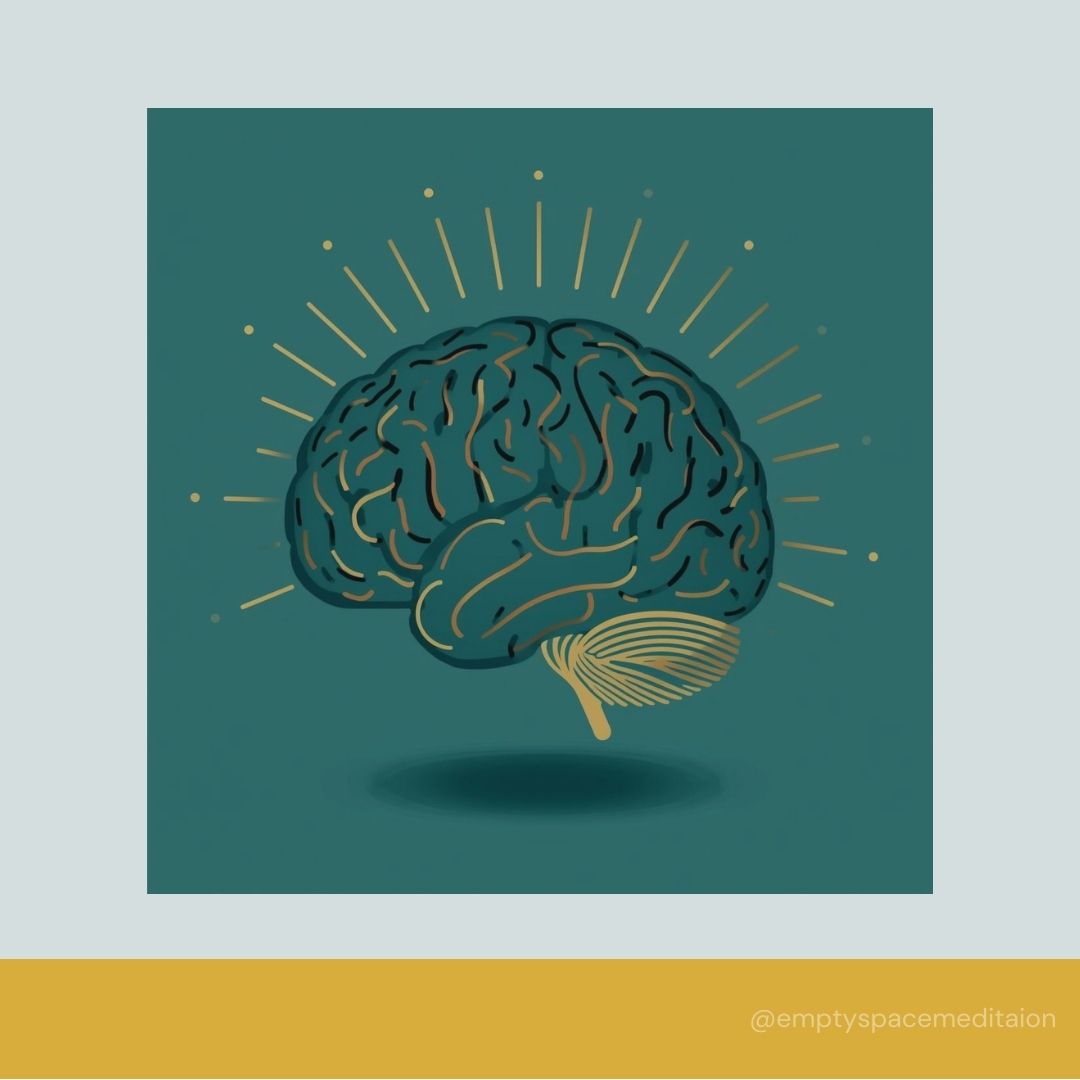
Rick Hanson at UC Berkeley’s Greater Good Science Center writes: “The mind can change the brain.” The adult brain is not fixed at the point of its most difficult experiences. Until very near the end of life, new neural pathways form, old ones weaken, the structure of thought and habit and response reshapes itself with what you practice. The science is specific: you are not stuck. Not because of optimism. Because of neuroplasticity.
Sara Lazar at Harvard found something concrete: long-term meditators have more gray matter in the prefrontal cortex and insula — regions associated with self-awareness, attention, and compassion — than matched non-meditating controls. The practice physically changes brain structure. Not metaphorically. Measurably.
Tara Brach teaches: “The greatest blessing we can give ourselves is to recognize the pain of this trance, and regularly offer a cleansing rain of self-compassion. The adult brain changes throughout our lives. Until the very end, we rewire ourselves through practice. We are not limited by the past.”
Your childhood trauma doesn’t determine your future. Your father’s rage doesn’t have to be your rage. Your mother’s depression doesn’t have to be your depression. The patterns are real, they were learned, and they can be unlearned — not through willpower, not through understanding alone, but through repeated practice of something different. That repetition is what changes the biology.
Joseph Goldstein’s instruction “start again” is the practical form of this. Not start again because this time will be different. Start again because starting again is itself the practice. Every time you notice the old pattern running and choose something else — even briefly, even imperfectly — you’re doing the work that neuroplasticity describes. The brain learns from repetition. You’re providing the repetition.
The struggle was real. The past shaped you. And transformation is equally real. The evidence is in the biology, and the path is in the daily practice.