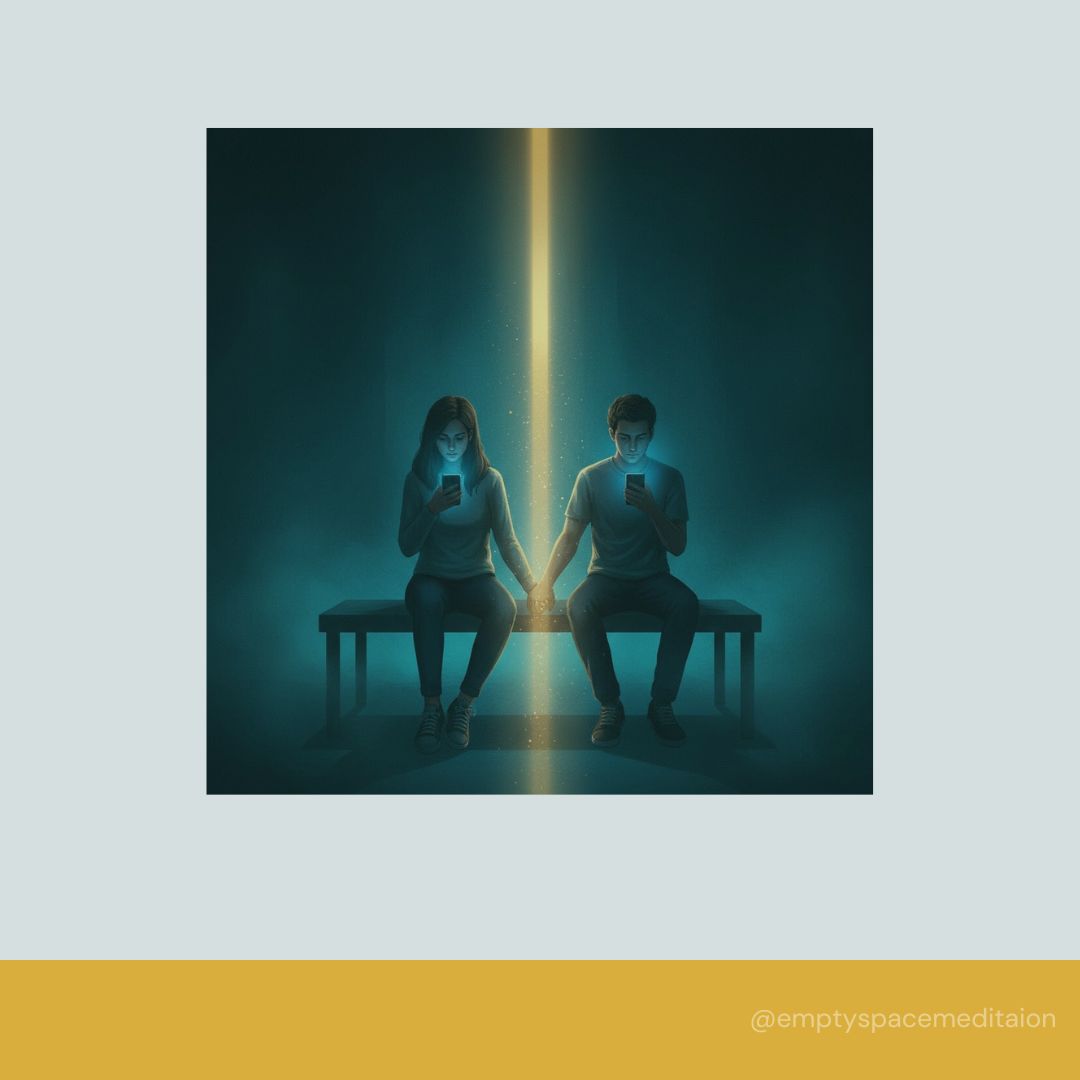
One in seven men reports having no close friends. I read that statistic and had to sit with it for a while, because I know what it points at. I was one of those men. Surrounded by people, utterly alone, and convinced that was somehow my personal failing.
It isn’t personal. It’s structural.
Robert Putnam documented this collapse in Bowling Alone back in 2000 — before smartphones, before social media, before the attention economy fully took hold. He tracked the dismantling of every form of civic and social connection in American life: bowling leagues, church attendance, neighborhood associations, dinner parties. The isolation we’re living now didn’t begin with the iPhone. The iPhone just accelerated and monetized something that was already in motion.
Johann Hari, in Lost Connections, makes the case that most of what we call depression and anxiety isn’t a brain chemistry problem — it’s a disconnection problem. His central line: “The opposite of addiction is not sobriety. The opposite of addiction is connection.” And in Stolen Focus, he tracks how tech platforms don’t just fill our loneliness — they profit from maintaining it. A lonely person is a captive audience. A connected person has somewhere else to be.
I spent years in that captive audience. After the Navy, during the drinking years, my social life was almost entirely performative. Bars, parties, acquaintances who knew the funny version of me. Nobody who knew what was actually going on. I told myself the isolation was my preference. It wasn’t. It was the path of least resistance in a culture that had quietly dismantled every other option.
The hard truth is that real friendship requires showing up in ways that are inconvenient, inefficient, and not optimized for anyone’s algorithm. It requires sitting across from someone and being boring together. It requires asking and being asked. It requires vulnerability, which is exactly what the screen version of connection is designed to make unnecessary.
Meditation has been, for me, the practice that makes real connection possible again. Not because it’s social — it’s not — but because it builds the capacity to be present. To sit with discomfort instead of reaching for a distraction. To tolerate the uncertainty of actually being known by another person. You can’t build real friendship from behind a wall of managed self-presentation. The practice helps you lower the wall.
Nobody wants to be your friend through a screen. They want to be your friend in the messy, unpredictable, irreplaceable way that only happens when you’re actually there.