Her name was Mary Doyle Keefe. She was 19, a telephone operator in Arlington, Vermont. Norman Rockwell paid her \$5 to pose for what would become one of the most iconic images of the 20th century.
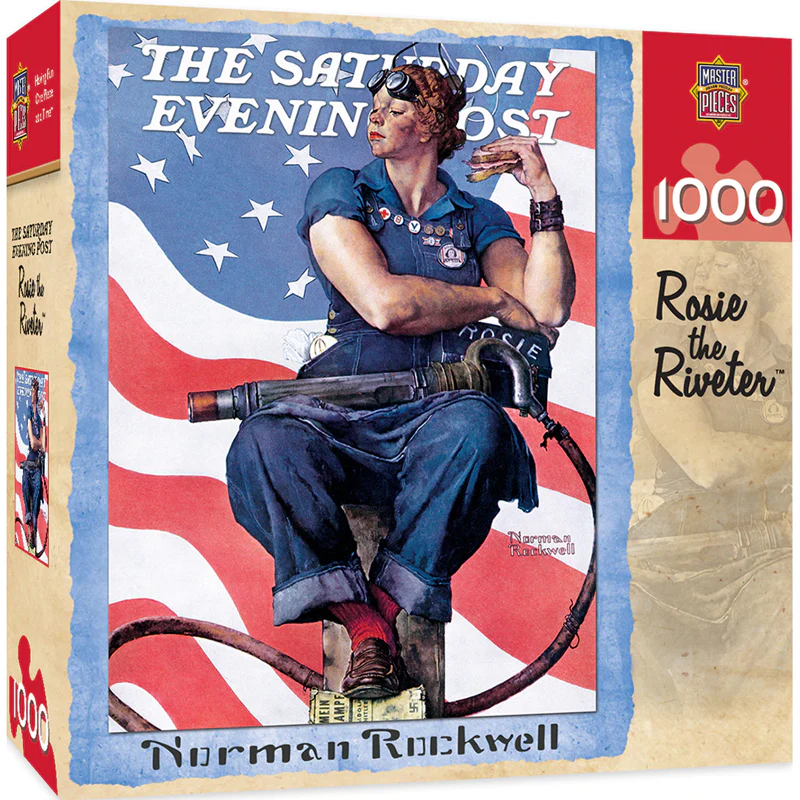
The real Mary was slender. Rockwell made Rosie muscular. Arms like a wrestler. Shoulders like a linebacker. A rivet gun across her lap like a scepter. Her foot resting on a copy of Mein Kampf.
He later apologized to Mary for making her look so masculine. She said she didn't mind. She understood what he was doing.
He was painting possibility.
This is what mindful observation can do—see past what is to what could be. Mary Doyle Keefe was a telephone operator. But Rockwell saw that she could also be something else. That all women could be something else, if given the chance.
During World War II, six million women entered the workforce. They built planes and ships and tanks. They discovered capabilities they'd been told they didn't have. And when the men came home, many of those women didn't want to go back to the kitchen.
Rosie the Riveter didn't cause that shift. But she gave it a face. She gave women permission to see themselves differently.
That's the power of art. It doesn't argue. It doesn't explain. It shows you something and lets you feel your own response.
"Some people have been kind enough to call me a fine artist. I've always called myself an illustrator. I'm not sure what the difference is." — Norman Rockwell
The "fine art" world looked down on Rockwell because his work was accessible. Because regular people could understand it. Because it didn't require a degree in art history to feel something.
Sound familiar? The meditation world has the same problem. Too many teachers make the practice complicated because complexity feels more legitimate. But the deepest truths are usually simple. A breath. A moment of presence. A woman with a rivet gun, showing us who we could become.
Mary Doyle Keefe lived to be 92. She spent decades being recognized as Rosie, signing autographs, representing something she never actually was—a factory worker during the war.
She didn't seem to mind. Maybe she understood that Rockwell hadn't painted her body. He'd painted her potential. And that potential belonged to everyone who saw it.
We all have a Rosie inside us. Strength we haven't discovered yet because no one's given us permission to look for it. Sometimes all we need is someone to paint us bigger than we think we are.
Sometimes we need to paint ourselves that way.
Support the Legacy: Rosie the Riveter prints are available from the Norman Rockwell Museum. Every purchase supports their mission. prints.nrm.org
