On June 21, 1964, three young civil rights workers disappeared in Philadelphia, Mississippi. James Chaney was 21 and Black. Andrew Goodman was 20 and white. Michael Schwerner was 24 and white. Both Goodman and Schwerner were Jewish. They were registering Black voters.
Their bodies were found 44 days later, buried in an earthen dam. They had been beaten, shot, and buried by members of the Ku Klux Klan—with the help of Deputy Sheriff Cecil Price.
Norman Rockwell painted it.
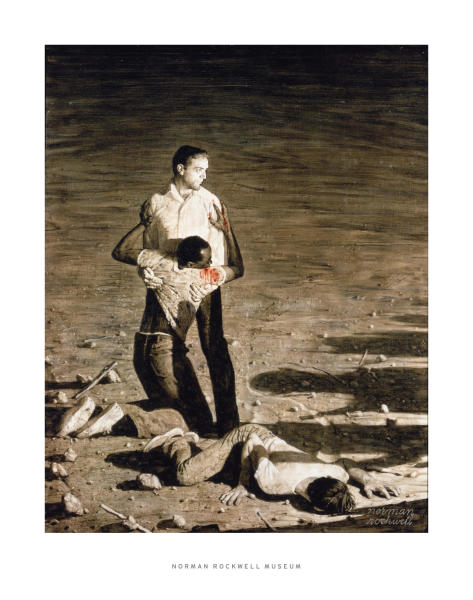
Look at the painting. Really look.
This isn't the warm, nostalgic Rockwell of Thanksgiving dinners and fishing trips. This is shadows and blood. The victims' faces. The terror. The moment before death.
Rockwell worked on this painting intensively for five weeks in early 1965, ignoring other commissions. He originally intended it to fill two pages—victims on the left, murderers on the right. But Look magazine's art director, Allen Hurlburt, made a surprising choice: he published Rockwell's rough sketch instead of the finished painting.
The rawness told the truth better.
Some truths don't come in polished form.
On July 14, 1964, The New York Times ran a story titled "A 2nd Body Is Found in the Mississippi." Rockwell tore this page from his newspaper and saved it. The story would become his foundation for one of his most stirring works.
Rockwell was 71 when he painted this. He could have spent his remaining years resting on his legacy. Instead, he chose to paint three young men being murdered for believing that Black people should be allowed to vote.
"I was very timid when I was young, especially about showing the harsher aspects of American life. But as I grew older, I became bolder." — Norman Rockwell
This is what getting bolder looks like. It doesn't mean being reckless. It means being willing to show what you see, even when what you see is unbearable. Especially then.
The murderers were identified but not convicted of murder—Mississippi wouldn't do that. The federal government charged them with civil rights violations instead. Some served a few years. Most walked free.
It wasn't until 2005—41 years later—that one of the killers was finally convicted of murder. Edgar Ray Killen, a Baptist preacher, was sentenced to 60 years and died in prison in 2018.
Rockwell knew this painting wouldn't bring justice. Art rarely does directly. But it does something else: it makes forgetting impossible.
You can't look at Murder in Mississippi and pretend it didn't happen. You can't look at those faces and tell yourself it was a long time ago, in a different America. Because the America that killed those boys is the same America we're still living in. Different tactics, same fear.
Rockwell didn't paint this because he thought it would change anything. He painted it because some things need to be witnessed. And once you see them, you become a witness too.
What you do with that witness is up to you.
Support the Legacy: Museum prints available at prints.nrm.org. Your purchase supports the Rockwell family's mission to preserve his true legacy.
