I used to think being funny meant I was fine. Every joke was a fence I built between me and feeling anything real. Make them laugh before they see you're terrified. Keep the room light so nobody looks too close at the darkness you're carrying.
I got really good at it. By the time I left the Navy, I could walk into any room and have people smiling in under a minute. It was useful. Socially, professionally, even in relationships — for a while. People like funny. People trust funny. Funny people seem okay.
The problem with that strategy is the fundamental lie underneath it. The joke isn't the truth. It's the thing you throw between yourself and the truth so you don't have to feel it. And you can do that for years. Decades, even. I know because I did.
Then I sat down to meditate for the first time — sober. I'd meditated as a kid in Catholic school in the eighties, but that was different. Rote prayer, going through motions, miles away from the interior work the contemplative traditions actually teach. This time it was real. And silence doesn't need a punchline. There's no audience to win over in meditation. No threat to deflect. Just you and the truth you've been running from.
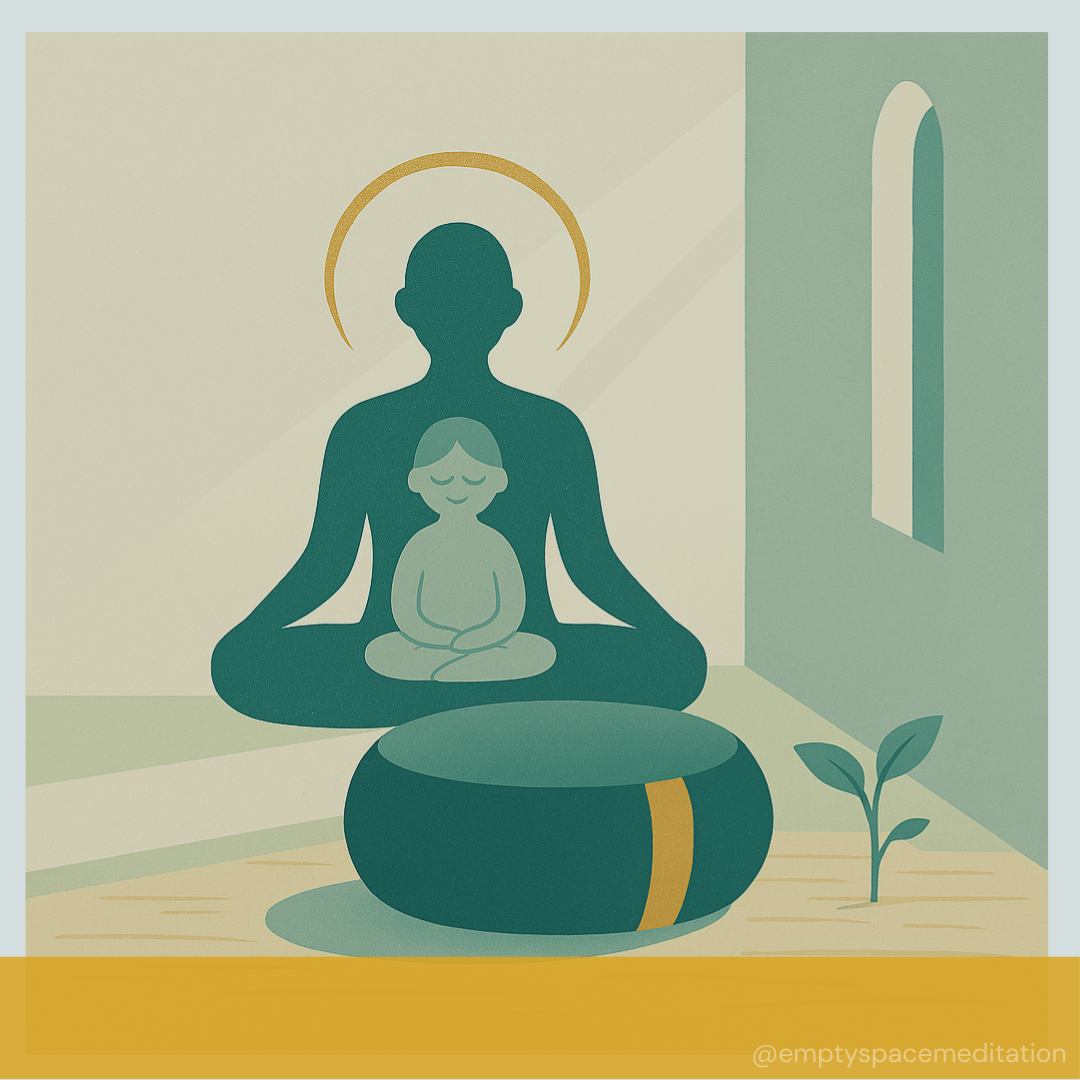
The scared kid was still in there. I was 40-something years old and he was still running the show from behind all those jokes. He'd just been very well managed, very well hidden, dressed up in competence and humor and a Navy record and a corporate career and all the other costumes adults wear when they're still scared kids inside.
Here's what I learned sitting with him: you don't have to fix him. You don't have to perform your way past him. You just have to acknowledge he's there. In the contemplative traditions I studied through Banyan — trained under Jack Kornfield and Tara Brach at Spirit Rock — we talk about bringing awareness to what's present without trying to change it first. See it clearly. Let it be here. That seeing is already transformative, even before you do anything about it.
The accountability piece isn't about performance either. It's not about having someone who gives you gold stars for meditating or judges you when you don't. It's about having a witness. Someone who asks, "Did you sit today?" not to grade you, but because your practice matters — and because you matter enough for someone to care whether you showed up for yourself.
That's a different thing than most of us were taught. We were taught to be impressive. To manage how we appear. To keep it funny and light so the scared kid underneath stays invisible. Accountability, real accountability, is the opposite of that. It's saying: here's who I actually am. Here's the practice I'm actually doing. Here's where I actually got stuck this week. And having someone respond not with judgment but with "I see you. Keep going."
The scared kid still shows up sometimes. He still reaches for the punchline when things get real. But now I have tools to sit with him instead of performing around him. Five minutes of quiet. One honest check-in. The practice isn't about becoming someone else — it's about finally getting comfortable being who you already are.
That's where it starts. Right here. The scared kid, the silence, and the willingness to stay.