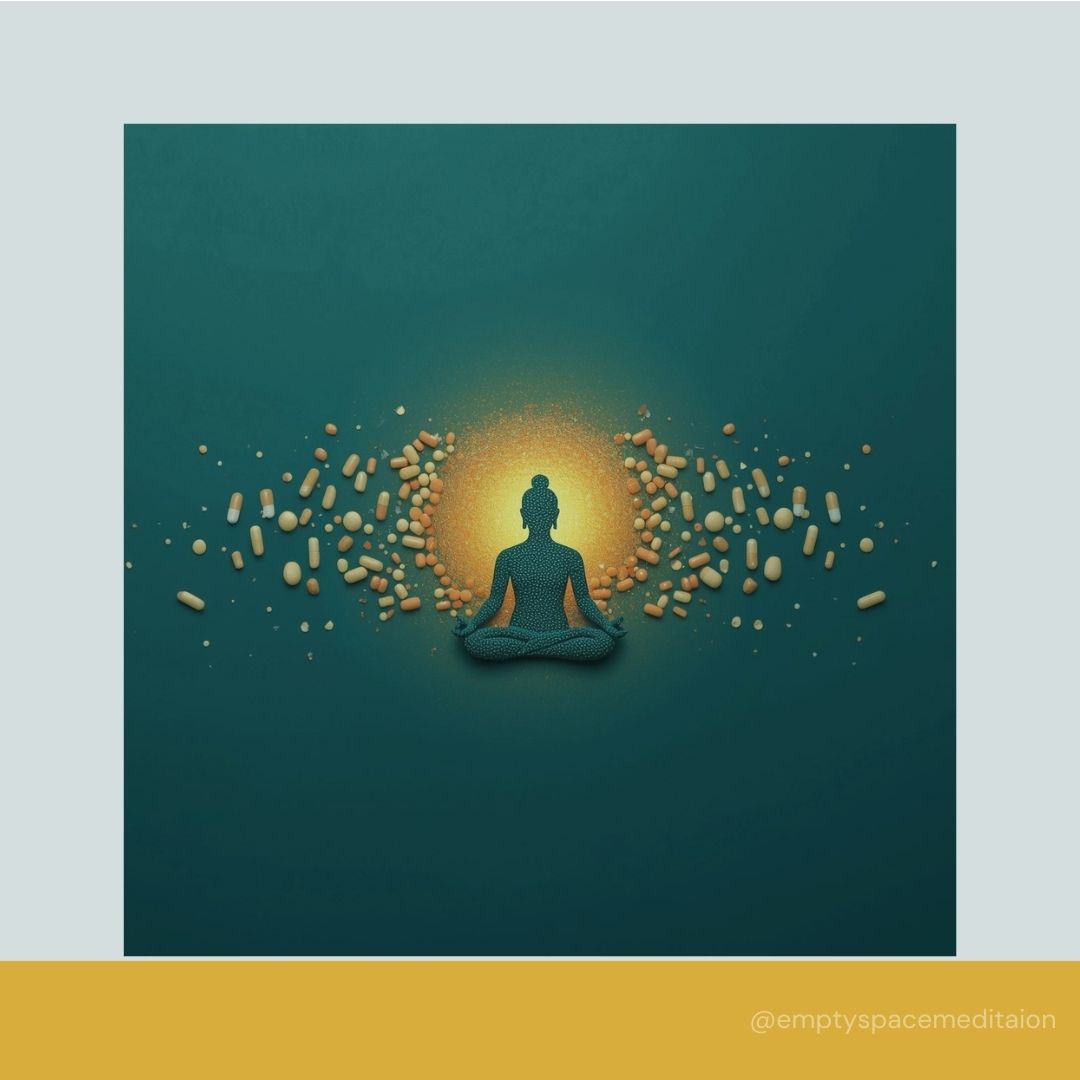
Medication can stabilize you. That matters. There are people for whom the right medication at the right time is the difference between being able to function and not — and I don’t want to dismiss that. But there is a limit to what medication can do, and that limit matters too.
Bessel van der Kolk is specific: “Treatments that focus solely on decreasing symptoms ignore the importance of integrating the traumatic experience in the overall arc of one’s life.” Medication changes your neurochemistry. It doesn’t change the neural pathways that trauma has laid down, the body patterns that store unprocessed experience, or the relational deficits that underlie most chronic suffering. You can be medicated and still be running the same patterns, still reacting from the same triggers, still as isolated as you were before.
Rick Hanson at UC Berkeley’s Greater Good Science Center explains the neuroplasticity mechanism: “The mind can change the brain.” Specifically, what you practice — repeatedly, consistently, across time — lays down new neural pathways and strengthens them. Medication doesn’t provide the repetition. It can lower the noise enough that the repetition becomes possible. That’s a useful function. It’s not the same as healing.
Jon Kabat-Zinn built MBSR after observing exactly this gap in conventional medicine: people being treated for symptoms without building the internal resources to address root causes. The practice he developed was specifically designed to build those internal resources — attention, regulation, the capacity to be present with difficult experience rather than medicating it into manageable range.
Jack Kornfield teaches: “In the end, just three things matter: how well we have lived, how well we have loved, how well we have learned to let go.” None of those are achievable at a dosage. They require practice, relationship, and the willingness to face what’s there.
Sometimes medication helps you get stable enough to begin the real work. If that’s where you are, use it for that. Just don’t confuse managing symptoms with integration. They’re pointing in the same direction. One is the bridge; the other is the destination.