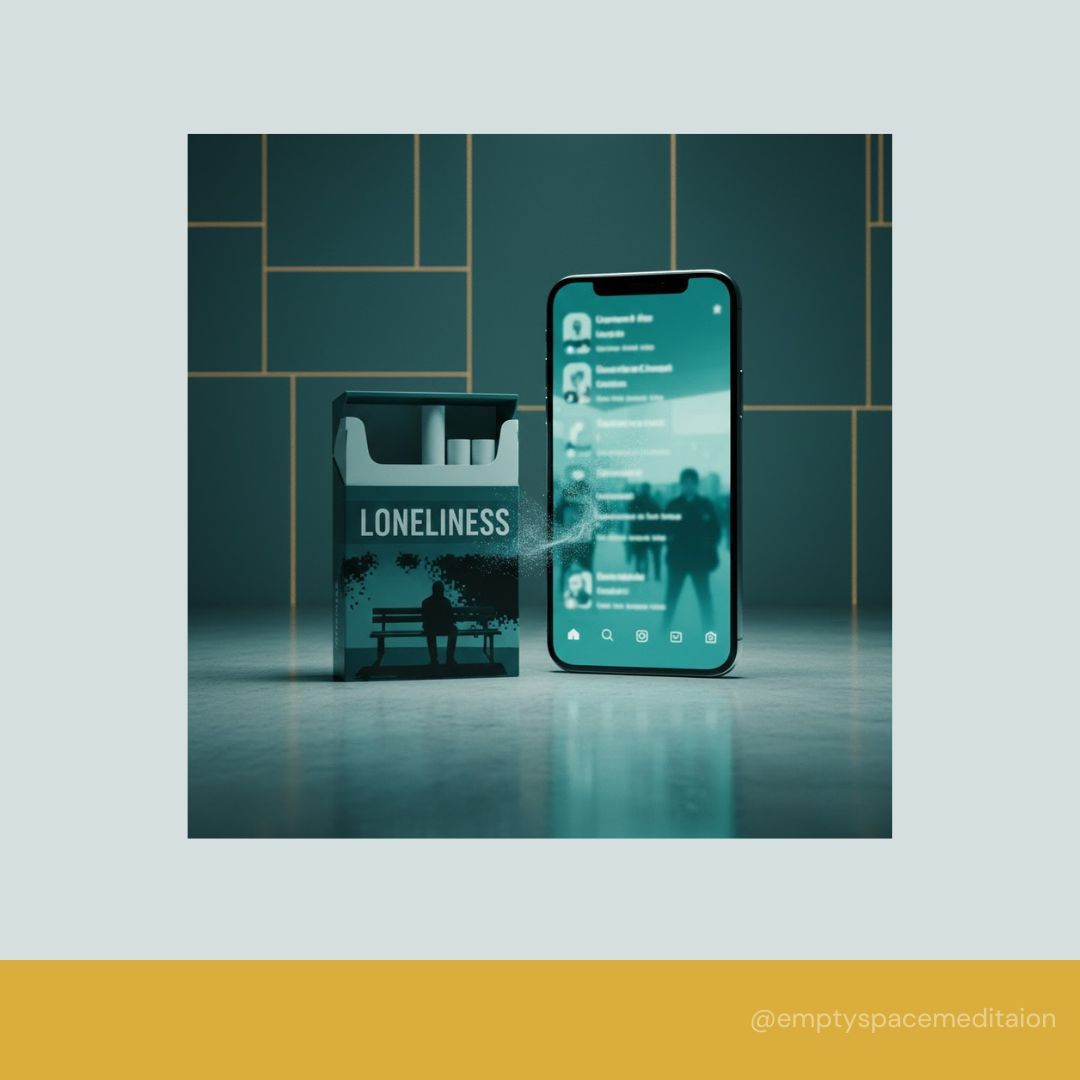
In 2023, Surgeon General Vivek Murthy issued an advisory on loneliness that was unprecedented in its scope. The headline figure — that loneliness carries health consequences comparable to smoking fifteen cigarettes a day — went briefly viral and then largely disappeared from public conversation. Which is itself worth noting.
We spent fifty years and billions of dollars on smoking cessation. We taxed cigarettes, restricted their advertising, required warning labels, ran public health campaigns, funded nicotine replacement research, and built entire healthcare infrastructure around helping people quit. All of this because we had evidence that smoking was killing people. We did the work.
The evidence for loneliness as a public health crisis is comparably robust. The research from Harvard Health, from the UC San Diego Center for Mindfulness, from the Greater Good Science Center at UC Berkeley — it consistently shows that sustained isolation correlates with elevated cortisol, impaired immune function, increased cardiovascular risk, accelerated cognitive decline, and sharply elevated rates of depression and anxiety. This is not soft data. And our public health response has been essentially nothing.
Part of the reason is that there’s no pharmaceutical solution. You can’t put connection in a pill and run a clinical trial. The interventions that work — actually being with other people, building reciprocal relationships, maintaining community ties over time — are not scalable in the way that tends to attract investment. They require sustained human attention, which is exactly what the attention economy is trying to monetize away from us.
What I know from my own experience with isolation — the years of drinking, of managing rather than connecting, of being in rooms full of people and completely alone — is that it does something to you. It makes you smaller. More reactive. Less curious. Less capable of the kind of sustained, patient presence that real relationships require.
Meditation didn’t cure my loneliness. What it did was rebuild the interior capacity that makes connection possible: the ability to be with myself without running, which turned out to be the prerequisite for being with anyone else. The cigarette comparison isn’t hyperbole. Take the medicine.