What this country needs is not a better algorithm. It doesn’t need a more nuanced feed or a healthier social media platform or a tech company with better values. It needs the sacred pause.
The concept runs through almost everything I know about contemplative practice across traditions. Thich Nhat Hanh called it “the medicine of the present moment” — the simple act of stopping, breathing, and actually feeling what’s happening right now before taking the next action. Viktor Frankl identified it as the locus of human freedom: the space between stimulus and response where choice lives. Every meditation tradition in every culture has some version of the same instruction: stop. Be here. Notice. Then act.
We have built an information environment that is specifically designed to eliminate that pause. Every notification, every autoplay, every infinite scroll is engineered to move you from stimulus to response without the interval where you might actually think. This isn’t accidental. It’s the mechanism. The business model requires the elimination of your capacity for deliberate choice.
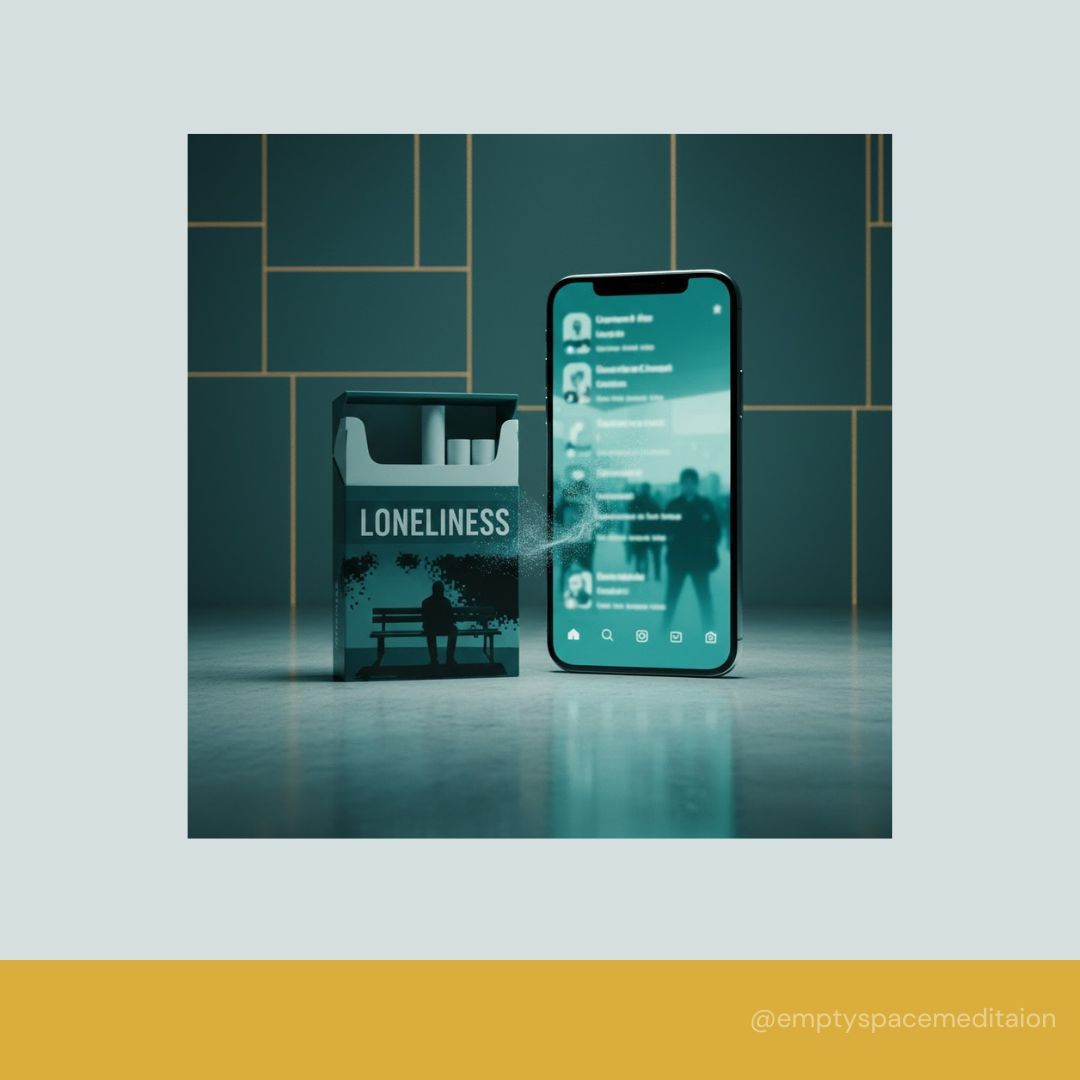
The Surgeon General’s 2023 advisory on loneliness noted something beyond the individual health consequences: sustained social isolation correlates with increased hostility and decreased capacity for empathy. When we are cut off from real human contact — the kind that includes disagreement and complexity and the full texture of another person — we become more reactive, less curious, more tribal. The algorithmic environment both creates that isolation and exploits its consequences.
I am not making a policy argument. I don’t know what legislation or regulation could fix this. What I know is that the practice works — that five minutes of actual stillness, practiced daily, builds something that the environment is trying to dismantle. Attention. Patience. The ability to be with complexity without resolving it prematurely. The capacity to choose.
The sacred pause is a political act right now. Not because it changes the system — it doesn’t, directly — but because it maintains your capacity to think clearly inside of it.